ServicesEnergy Efficient Windows
Energy Efficient Windows in Buena Park
We swap out old single-pane and tired dual-pane windows for low-E glass in solid vinyl frames. Rooms stay cooler in the afternoon, drafts stop and the AC gets a break. We pick the glass for each side of your home, not one package for every window.
What an energy efficient window actually does
Most heat gets into a house through the glass. A modern efficient window uses two panes with a thin metallic coating called low-E, a gas fill between the panes and an insulated spacer at the edge. Together they block much of the sun's heat while still letting light through.
The frame matters too. Old aluminum frames pass heat straight through and sweat on cool mornings. Vinyl frames with sealed chambers don't. Many homes around here were built in the 1950s through the 1970s with single-pane aluminum windows, and that is where you feel the biggest change.
We come out, look at what you have and tell you plainly which windows are worth replacing first. If only the west-facing rooms are a problem, we'll say so.
What's part of the job
Glass picked by exposure
South and west windows take the hardest sun, so we often suggest a low-E coating with a lower solar heat gain number there. North-facing windows can use a clearer coating that lets in more daylight.
Dual-pane units with gas fill
Argon between the panes slows heat moving through the glass. Warm-edge spacers cut down on heat loss at the edges, where older units tend to fog first.
Insulated vinyl frames
Multi-chamber vinyl frames don't conduct heat like bare aluminum. They also don't need painting and hold up well in strong sun.
A sealed install
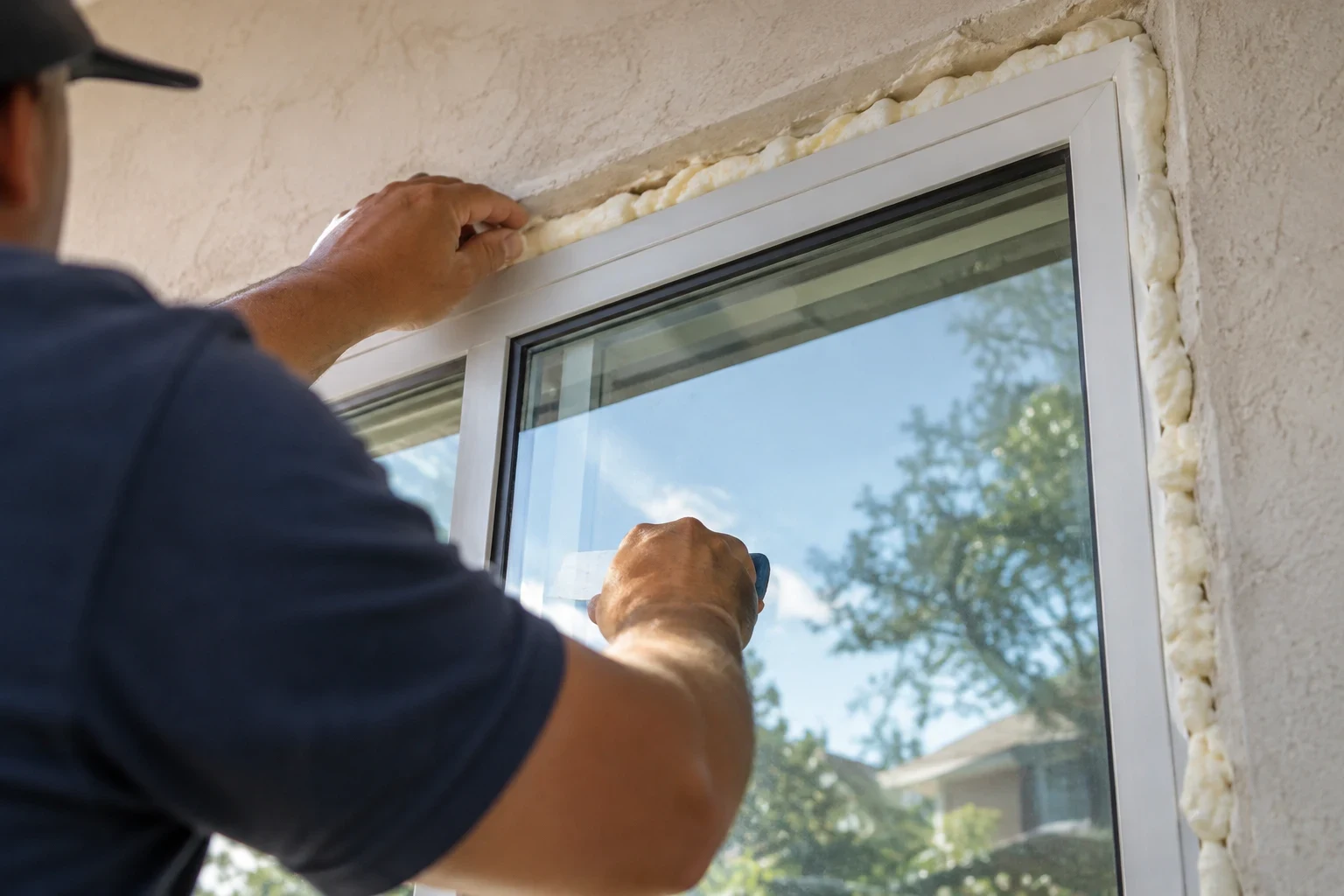
A good window leaks if the gap around it isn't filled. We insulate the space between the window and the wall opening, then seal inside and out so air and water stay where they belong.
Energy labels you can read
Every window comes with its rating label showing U-factor and solar heat gain. We walk you through what those numbers mean for your rooms and leave the paperwork with you.
Signs your windows are costing you
- Rooms that bake in the afternoon
- If one bedroom or the living room gets hot every afternoon even with the blinds shut, the glass is letting in too much heat.
- Fog between the panes
- Haze or moisture trapped inside a dual-pane window means the seal has failed. The gas is gone and the unit insulates about like single pane.
- Drafts and whistling
- Feel air moving near the sash on a breezy day, or see light around the frame, and you are paying to cool air that leaks right back out.
- Sweating aluminum frames
- Water beading on metal frames on cool mornings is a sign heat is moving straight through. Over time it stains sills and drywall.
- Faded floors and furniture
- Older glass lets in more of the sun's ultraviolet light. Low-E coatings block most of it, which helps rugs, wood floors and fabrics keep their color.
How the work goes
- 1
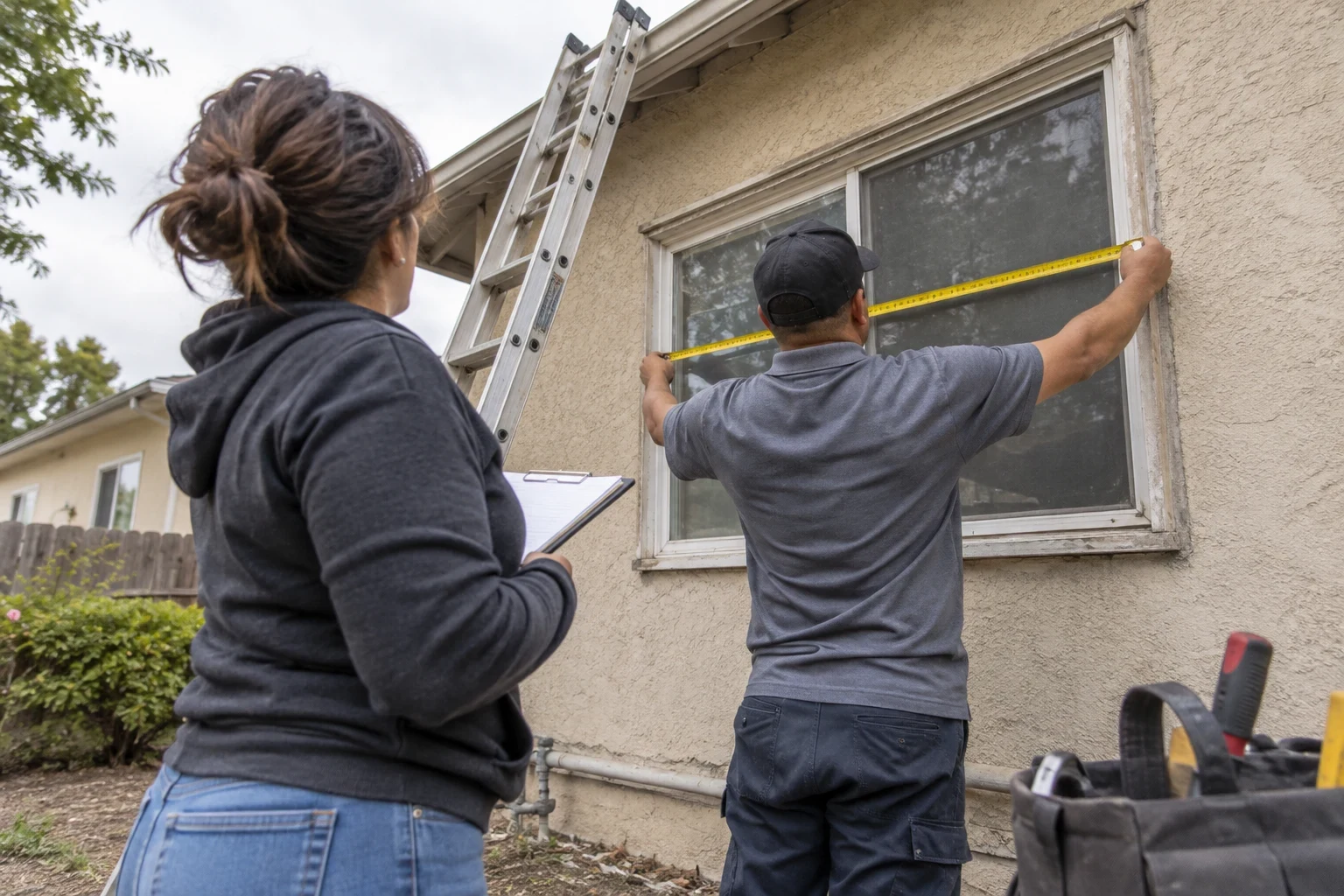
Estimate at your home
We measure every opening, check the frames and walls around them and note which way each window faces. You get a written estimate by window, with no sales pressure and no obligation.
- 2
Ordering to size
Windows are built to your measurements. While they are made, we handle the permit if your city requires one for the job.
- 3
Install day
We lay down drop cloths and work one window at a time. The new unit goes in, the gap gets insulated and both sides get sealed, and only then does the next old window come out. That keeps the house closed up through most of the day.
- 4
Cleanup and walk-through
We haul off the old glass and frames and vacuum up. Then we open and lock every window with you and show you the labels.
What moves the price
The price comes down to how many windows you're changing, how big they are and which glass and install method fit your home. Your written estimate lists each window separately, so you can see what every opening costs and decide where to start. Nothing gets added after the fact without talking to you first.
- Number and size of windows
- More windows usually lowers the cost per window. Large picture windows and oversized sliders cost more to build and handle.
- Glass package
- Standard low-E is the starting point. Special coatings for hot exposures, laminated glass for noise or tempered glass where code calls for it all add cost.
- Retrofit or full frame
- A retrofit sets the new window into the existing frame with little wall work. Full-frame removal costs more but makes sense when the old frame or the wood around it is damaged.
- Shapes and access
- Arches, odd shapes and second-story windows that need ladders or extra hands take more time and material.
Questions about energy efficient windows
- Will new windows lower my electric bill?
- They usually help, most of all in summer when the AC is working hardest. The savings vary with the windows you're taking out, which direction your rooms face and how well the attic and walls are insulated. Going from single-pane aluminum shows the biggest difference. We won't promise a number we can't stand behind.
- Does low-E glass make rooms darker?
- Not much. Modern coatings are close to clear and still let in plenty of daylight. Some of the stronger heat-blocking coatings have a slight tint, so we show you samples and suggest them only for windows that take the hardest sun.
- Should I go with a retrofit or full-frame install?
- If your existing frames are solid and square, a retrofit is quicker, costs less and avoids patching stucco. If the frames are rotted, bent or leaking, full frame is the honest answer. We look at each opening and tell you which one it needs. Our Window Retrofitting page covers that method in more detail.
- Do the windows have to meet California energy rules?
- Yes. California's energy code sets limits on how much heat replacement windows can let through. The windows we install meet those requirements, and the rating label on each one shows it.
- How long does the install take?
- Most homes are done in a day. A large house or a lot of full-frame work can run into a second day. We give you a time estimate when we measure.
- Can I just replace a few windows now?
- Sure. Plenty of people start with the hottest rooms and do the rest later. We'll help you pick which ones make the most difference first.
Find out which windows are worth changing
We'll come by, look at every window and give you a straight answer on what will help. Free in-home estimates with no sales pressure or obligation.