ServicesWindow Retrofitting
Retrofit Windows for Buena Park Homes
We remove the old sashes and glass, keep the original frame in place and fit a new window made to size over it. The stucco isn't cut, the drywall isn't touched, and most houses are finished in one day.
How a Retrofit Works and When to Choose One
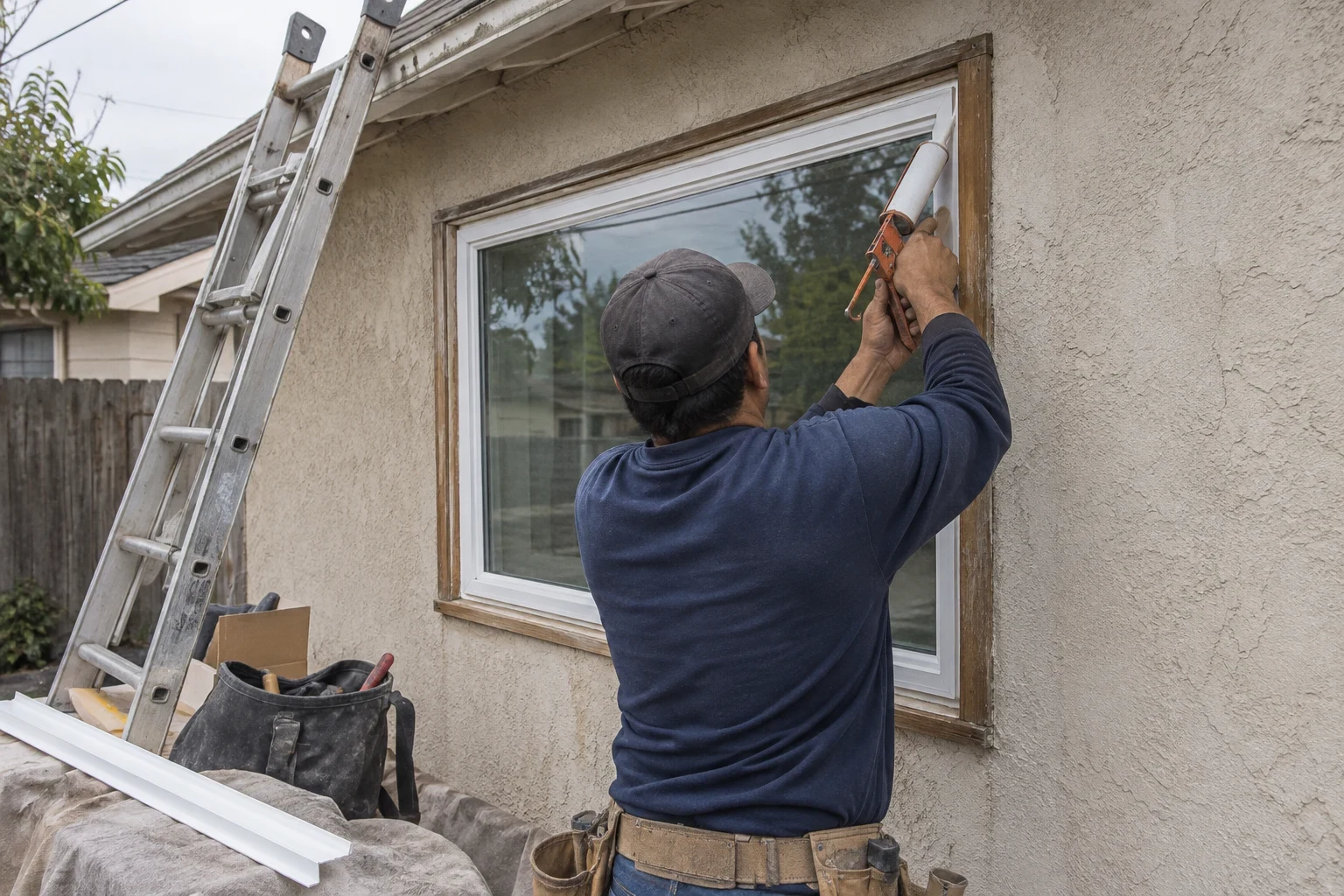
A retrofit window is sized to sit inside your current frame. We remove the old sliding panels and fixed glass, clean the frame and set in a new window whose flat flange covers the old metal on the outside. Sealing and caulking finish it so water runs off the way it should.
It works when the existing frame is solid, square and free of water damage. A lot of stucco ranch houses in the area still have their first aluminum frames, and those frames usually stay sound long after the glass and tracks wear out. Keeping them means no stucco cutting, no patching and no repainting outside.
When the frame is bent, the wall behind it has water damage, or you want a different opening size, a retrofit isn't the answer. We'll say so at the estimate and explain full-frame window installation instead.
What the Work Includes
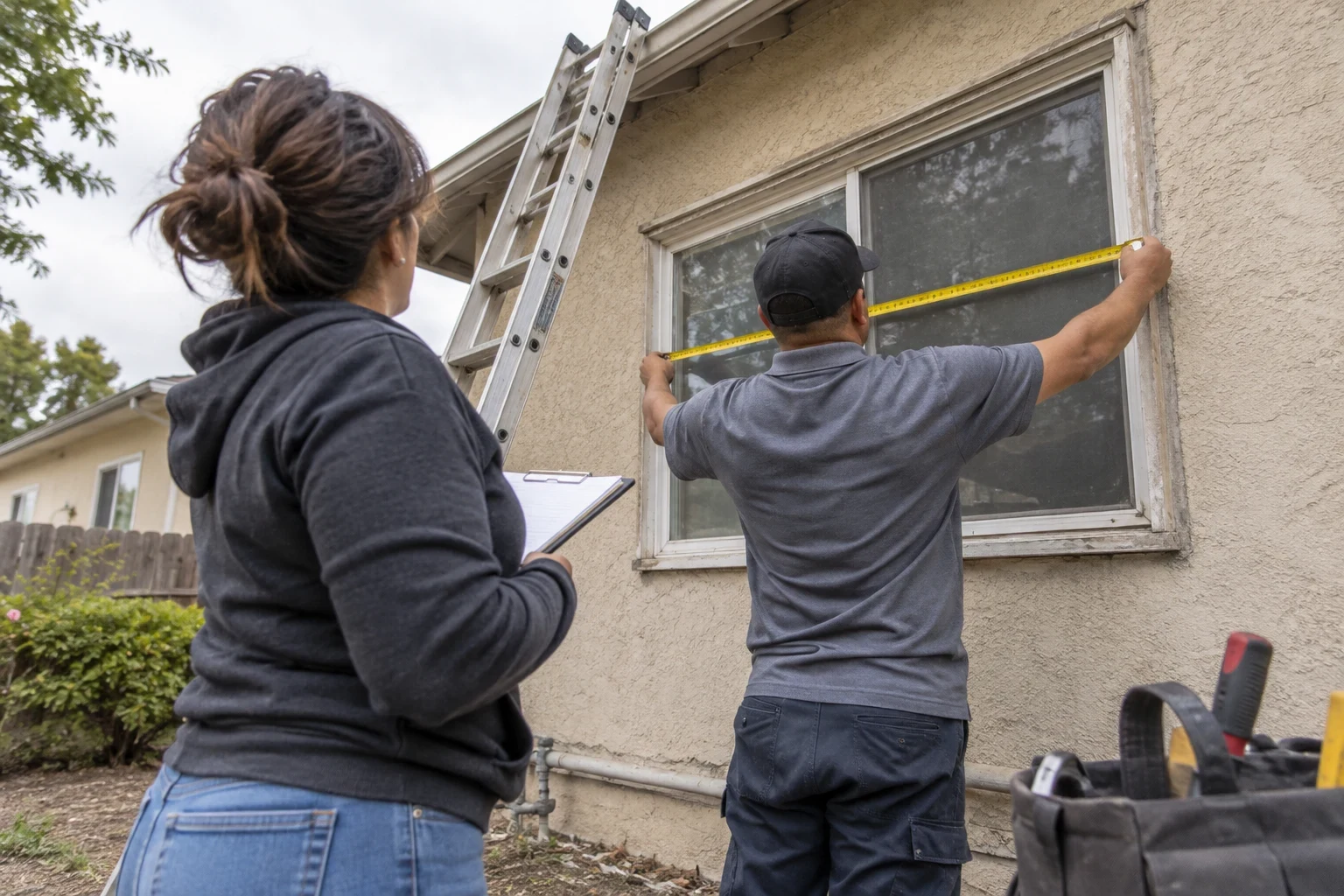
Measuring every opening
Retrofit windows are made to order, so we measure each opening in a few spots. Old frames are rarely perfectly square, and that check keeps gaps small.
Removing the old glass and tracks
We take out the old panels, screens and any loose hardware. The frame itself stays in the wall.
Setting and sealing the new window
The new window is set level, shimmed and screwed through to the framing. We seal the flange on the outside and caulk the joint so rain stays out.
Tempered glass where code calls for it
Openings near a tub, a door or close to the floor need safety glass. We spot those at the estimate and order them that way.
Inside finish and cleanup
We caulk or trim the inside edge so it looks finished. Then we vacuum, wipe down sills and haul the old windows away.
Clues Your Windows Are Due for a Retrofit
- Panels that stick or jump
- Worn rollers and tracks make sliders hard to move. If the frame is still solid, a retrofit replaces every moving part in one go.
- One layer of glass
- Single-pane glass lets afternoon sun heat the room and lets traffic noise through. New dual-pane units reduce both.
- Moisture on or inside the glass
- Beads of water on chilly mornings or haze between the panes tell you the glass has stopped working.
- Cold air where the panels meet
- Weatherstripping goes flat with age. You notice it as a thin line of cool air at the latch and meeting rails.
- Stucco worth keeping
- When your exterior walls are in good condition and recently painted, a retrofit upgrades the windows and leaves the walls alone.
How Your Retrofit Goes
- 1
Free estimate at your home
We visit, look at every window and check each frame for bends, rot or water marks. You get a written quote listing each window, with no sales pressure or obligation.
- 2
Ordering to size
After you approve, we order every window to its own measurements. When they come in, we pick an install date with you.
- 3
The install
Drop cloths go down inside, and we handle one window at a time so no room stays open long. The noisy part is brief, mostly removing old panels and driving screws.
- 4
Checking it with you
Before we leave, we walk each room with you and try every new window: slide it, latch it, check the seal. A window that drags or a caulk line that looks rough gets fixed right there.
What Changes Your Price
We price a retrofit one window at a time, so the quote reflects what your home actually has. Every window appears on a written quote before we start. If a frame changes the plan, we tell you at the estimate, not partway through the work.
- How many windows, and how big
- More windows take more material and labor, but doing the whole house in one go is more efficient than a few at a time.
- Glass options
- Low-E coatings, gas fill, tempered safety glass and obscure glass for bathrooms each raise the price of a unit.
- Window style and frame color
- Sliders and single-hungs are the most basic. Casements, picture windows, unusual shapes and darker colors cost more.
- Shape of the existing frame
- A frame that is bent or out of square needs more shimming and trim. If it can't be saved, we tell you and price a full-frame job instead.
Questions About Retrofit Windows
- Does a retrofit mean cutting my stucco?
- No, and that's the biggest reason people choose one. The old frame stays put and the new window covers it on the outside, so your stucco and paint aren't disturbed.
- Will I lose some glass area?
- Slightly. Because the new frame fits inside the old one, a thin band around the edge is lost. Most homeowners don't notice, and today's frames are narrow enough that the view stays nearly the same.
- Does a retrofit save as much energy as full-frame?
- The new window's glass and frame work the same with either method. What matters is a tight seal where the new window meets the old frame, and that's where we put most of our attention on install day. Our Energy Efficient Windows page covers your glass choices.
- How long will it take?
- For a typical home, the install takes about a day. The wait for the windows is longer because each is built to your measurements, and we set a date once they arrive.
- Does someone need to be home while you work?
- We need an adult to let us in at the start and be there for the final check. In between, spend the time however you want, at home or away. Drop cloths stay down and we clean as we go, so your home never feels like a construction site.
Find Out If a Retrofit Fits Your Home
We will look at your frames, tell you straight whether a retrofit or a full-frame job is the better fit, and leave you a written quote. No pressure, no obligation.